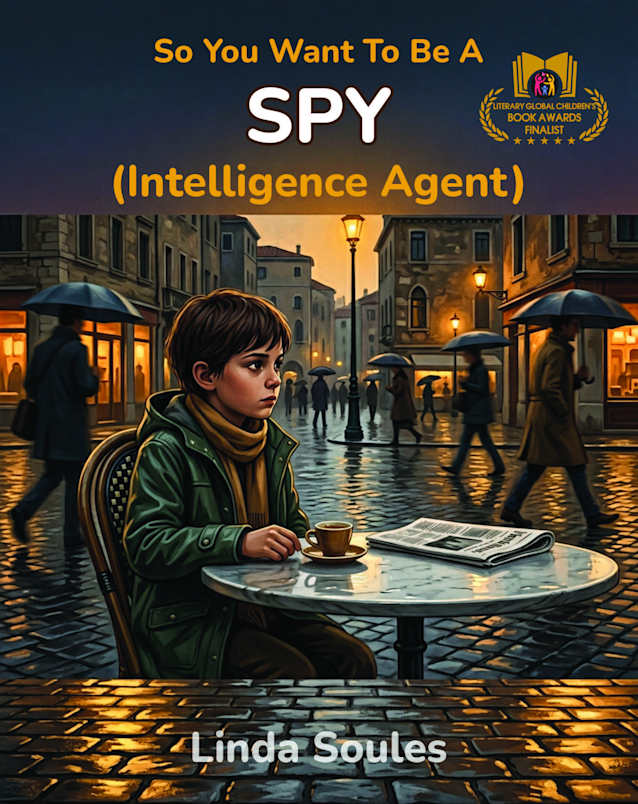
So You Want To Be A Spy (Intelligence Agent) (So You Want To Be A...)
About
FINALIST — 2026 Literary Global Children's Book Awards (Educational Category)
You will not find this job on a bulletin board. There is no uniform, no badge visible to the public, no moment where someone pulls you aside and says well done. The work happens in the space between what is known and what must be known — and the distance between those two things is where everything is at stake.
So You Want To Be A Spy takes young readers ages 10–14 inside one of the most demanding and most misunderstood professions in the world — not the movie version, but the real one. The years of training that happen before a single mission. The specific discipline of thinking clearly under pressure, reading people accurately, and making decisions when the information is incomplete and the margin for error is zero. The team of analysts, linguists, technologists, and field officers working in careful coordination, most of whom will never be known by name. The operation that goes exactly as planned — and the one that requires you to think faster than you ever have before.
This is a book about what intelligence professionals actually do: the foreign languages they master and the cultures they study with the depth of a scholar, the analytical frameworks they use to turn raw information into actionable intelligence, the surveillance and counter-surveillance techniques they train for obsessively, and the steady, disciplined judgment they bring to situations where the wrong call has consequences that reach far beyond the room they are sitting in. It’s also a book about what the work costs, what it demands, and why the people who do it say it is the most serious work they can imagine — and the most important.
Inside, young readers will discover:
- What a real intelligence professional’s training and work actually looks like — from language immersion to analytical tradecraft
- The science and psychology behind reading people, assessing situations, and understanding how the world’s actors think and move
- The different roles within the intelligence community — from field officers to cryptanalysts to geospatial analysts
- The history of espionage and the pivotal operations that shaped the modern world
- What young people can do right now to discover if this might be their calling
Honest, specific, and genuinely illuminating, So You Want To Be A Spy doesn’t talk down to young readers — it brings them all the way in. Because the child who wants to know what this work is really like deserves a real answer.
For readers who feel the pull toward something precise and consequential and hidden in plain sight. For the kid who watches a room, notices everything, and feels something shift.
The world runs on information. Someone has to understand it well enough to protect what matters. Maybe that someone is you.
Ages 10–14 · Nonfiction · Careers & Professions · Illustrated
Praise for this book
"Most young people today watch movies featuring spy stories, with car chases, exciting scenarios, and quick-fix conclusions. So You Want To Be A Spy by Linda Soules opens the door to the real world. As one of her series explaining many different careers, in this book, she states what qualities an actual spy, or intelligence agent, needs to have for this kind of work. In simple terms, she lists the different aspects of intelligence work. There is field work, where a spy might be sent to a foreign country with a different name and history after learning a new language. Other spies may construct a fake history together with new passports, identity papers, and a new persona for a field agent. Soules explains that most spies work in ordinary offices, collecting information, sharing this with other in-house employees to discover the truth. Also, there are technical workers who prepare essential aids for agents in the community. A description of a typical workday shows the young prospective spy what to expect.
So You Want to Be A Spy by Linda Soules is a short book, but she packs in a wealth of knowledge. Besides listing the different departments in a secret service, she tells young readers what qualities are needed to be successful in this career. There are exercises to practice skills, further reading material to follow up, and the real truth to explain spy craft. I was so impressed with the basic information, the down-to-earth approach, and the wealth of knowledge packed into the pages. The language is easy, the points are clearly set down, with a behind-the-scenes look at what work a spy really does. This is an excellent book for young people, and I highly recommend it. A series that should be in every school library."
"As a parent, I really appreciate what So You Want To Be A Spy does for kids who are fascinated by spies. Instead of leaning into the movie version with car chases, exploding gadgets, and impossible escapes, this book gives young readers a much more realistic look at intelligence work. It explains that being a spy is less about looking cool and more about paying attention, thinking clearly, learning languages, reading people, and knowing how to separate facts from guesses.
What stood out to me most is how practical and down-to-earth the book feels. Soules explains the different kinds of work that happen inside an intelligence agency, from field agents and analysts to technical specialists and people who create cover identities. I liked that it shows kids a typical workday and makes it clear that a lot of spy work happens in offices, through research, teamwork, paperwork, and careful decision-making. That honesty makes the exciting parts feel more meaningful.
The book is short, but it’s packed with useful information. Did you know that Harriet Tubman was one of the most effective spies in American history? I didn’t, but that’s just one of the amazing things I learned from this book. There are exercises kids can try, profiles of real spies from history, and suggestions for what young readers can do now if they’re interested in this kind of career. I also liked that it doesn’t sugarcoat the harder parts of the job, like long hours, pressure, secrecy, and doing important work that may never be publicly recognized. That’s a valuable lesson, especially for kids growing up in a world where everything seems to get posted and praised instantly.
I’d recommend this book for curious readers around age ten and up, especially kids who love puzzles, maps, mysteries, codes, and noticing details other people miss. The writing is clear and engaging, though some of the vocabulary may be better suited for strong readers or young teens. Overall, So You Want To Be A Spy is a smart, fun, and honest introduction to espionage, and I can definitely see it being a great fit for a classroom or school library."
"At a glance, So You Want To Be A Spy (Intelligence Agent) seems poised to deliver the usual intrigue—gadgets, disguises, and high-stakes missions. As a children's picture book, it might be expected to lean into excitement and fantasy. Instead, it takes a quieter, more deliberate route, presenting intelligence work as a discipline built on observation and patience.
The book begins by asking readers to imagine the world as a puzzle with missing pieces, and that idea lingers throughout. Information comes in fragments — reports, images, conversations— and the task is not to collect everything, but to make sense of what's incomplete. From there, the narrative steadily reframes what it means to be a 'spy.' The focus shifts away from action and toward analysis: reading carefully, asking better questions, and being willing to revise your thinking when new evidence appears.
That perspective carries through the structure. Sections on daily work, tools, and environments reveal a profession that is often routine and methodical. The 'Day in the Life' pages, for instance, emphasize reading, discussion, and writing as much as any fieldwork. Even the visuals follow suit — cafés, offices, and quiet meetings dominate, reinforcing the idea that most of this work happens in plain sight.
What gives the book its edge is its attention to thinking itself. It introduces ideas like confirmation bias and the importance of admitting uncertainty, noting that sometimes the most honest answer is simply 'I don't know.' That emphasis on intellectual discipline — and on loyalty to truth rather than assumption — adds a layer of seriousness not often found in books for younger readers.
For readers willing to engage with its complexity, the book offers something more enduring than simple excitement: a way of observing the world more closely and questioning what first appears obvious. A measured, quietly engaging introduction for young readers that trades spectacle for substance — and is stronger for it."
"So You Want To Be A Spy (Intelligence Agent) by Linda Soules pulls back the curtain on espionage and gives ten- to fourteen-year-olds a grounded guide to a profession rarely explained this clearly. It is thoughtful career nonfiction that respects curious kids and the adults who share these pages with them.
Open it and the job comes into focus: how analysts gather fragments from satellites, public records, and field contacts, through cover identities, dead drops, and encrypted communication. A typical day unfolds step by step: morning reviews, team analysis sessions, quiet café meetings, and precise report writing. The book also explains handlers, linguists, and the 'need to know' rule. Profiles of Virginia Hall, Noor Inayat Khan, Harriet Tubman, and Juan Pujol Garcia sit alongside the qualities the job demands, plus practical drills like bias journals and source checks, a glossary, and further reading for families.
Soules writes with a steady, plainspoken voice, treating complex ideas without watering them down. As one entry in the So You Want To Be A... series, it matches that tone with illustrations of embassy offices, hidden cameras, and everyday workspaces that help younger eyes follow along. Parents will find the pacing comfortable for read-aloud sessions, and nothing ever sounds lecturing or inflated.
For children who catch details others overlook, this volume opens a door to disciplined thinking. It points them toward truth-seeking habits that matter far beyond any spy fantasy on screen, and that is exactly why it belongs on a family shelf."
"Take every spy novel or news article you’ve ever read and break down all the detailed information about how intelligence agents live, work, and conduct business in an easily accessible book made for middle-grade students. It sounds like it would be a challenge, yet that is exactly what Linda Soules does in her book, So You Want to Be a Spy (Intelligence Agent).
It would be easy to glamorize the role of the secret intelligence agent, but Soules does a good job ensuring that young readers get a complete picture of what an actual role as a spy could look like. Of course, there is mention of secret drops, disguises, and double lives, but there is an equal measure of desk work, study, and intense analysis. While she makes the role sound exciting (which it certainly is!) Soules also understands that young readers aren’t naïve. She carefully portrays what an actual career could potentially look like for someone interested in the role.
Soules doesn’t just stop at career descriptions. She draws on the examples of real famous spies like Virginia Hall, Noor Inayat Khan, Harriet Tubman, and Juan Pujol Garcia for readers to delve into for deeper reading. Their stories may seem unbelievable at times, but what makes these people truly remarkable is their intelligence, tenacity, and curiosity to explore- something that Soules encourages in her readers.
While a potential career may still be decades away, Soules provides tangible steps for readers to pursue a job as an intelligence agent down the line. She encourages interested students to train, question everything, and learn as much as possible, among other things.
If you or your child has ever been obsessed with books like the Dangerous Books for Boys and Girls, created a secret code, or if you are a 'kid who ever noticed what everyone else walked right past,' So You Want to Be a Spy is a book you want to read. In fact, Linda Soules has created an entire line, the So You Want to Be a… series, to help children explore unique and fascinating careers."
"Linda Soules’ So You Want To Be A Spy (Intelligence Agent) takes a subject almost guaranteed to capture a young reader’s imagination and does something unexpectedly worthwhile with it: it removes much of the Hollywood mythology without removing the fascination.
Aimed primarily at readers ages ten to fourteen, the book presents espionage not as a world dominated by car chases, gadgets, and impossible escapes, but as a profession built upon observation, patience, critical thinking, communication, and the ability to make sense of incomplete information.
One of the book’s strengths is the breadth of its introduction to intelligence work. Readers learn about analysts, linguists, technical specialists, handlers, researchers, and field agents, while concepts such as encrypted communication, cover identities, dead drops, and the “need to know” principle provide enough intrigue to keep the material engaging. Just as importantly, Soules shows the less glamorous reality: reading reports, conducting research, attending meetings, analyzing information, and writing assessments.
The book becomes especially valuable when it moves beyond explaining espionage and begins teaching readers how to think. Discussions of confirmation bias, evaluating sources, separating evidence from assumptions, and being willing to admit “I don’t know” introduce habits that extend far beyond intelligence work.
Historical profiles of Virginia Hall, Noor Inayat Khan, Harriet Tubman, and Juan Pujol Garcia add another welcome dimension, demonstrating how courage, ingenuity, persistence, and careful observation have shaped real intelligence work. Practical exercises involving observation, source checking, and questioning assumptions also give young readers ways to develop those same skills...So You Want To Be A Spy succeeds because it understands that children do not need a profession exaggerated in order to find it interesting. For young readers who love mysteries, codes, maps, puzzles, or simply noticing what others overlook, Soules offers an informative and thoughtful introduction to the intelligence world—one that wisely trades some of espionage’s spectacle for substance."
"It's not always glamorous and fast pace like the movies make it out to be... just the right amount of information to give a clear idea of what to expect while also keeping my child's attention."
"Super cool read if you have a wannabe spy in your life!"
"This series is so fun. I've read a couple now and find them to be really great. The series mainly brings an introduction into different topics regarding what a child might want to do when they 'grow up' and tells them some of the steps to get started...So You Want To Be A Spy details the day in the life of the intelligence agent, some of the skill an agent might need, different types of job roles within an intelligence agency, and many things you might not know about this type of career. It makes the job seem interesting and exciting, while also being practical and noting some of the more challenging and less glamorous aspects. I really liked the art and writing style of this book and definitely recommend trying this series out if you child has an interest in any of the topics presented in this book series."
"There was genuinely so much I didn’t know or never thought to consider about the everyday lives of an intelligence agent. This book taught me so much. So glad I read it."
"This is a great book for the young aspiring intelligence agent or any kid with an active imagination and curiosity. It teaches observation of surroundings and critical thinking as well as a basic understanding of what an intelligence agent does."
"The good and the bad of the career is laid out in an easy to read and understandable way. These books are well thought out and include fun facts, useful tools, and even what a day in the life would look like."
"I thoroughly enjoyed reading this book. It was easy to read, informative, and useful. The fun facts portion was definitely a favorite."
"Gives a kid a realistic description of what it is like to be a spy, doing away with the 007 Hollywood stereotype, while still making the case that these unsung heroes are in fact heroic."
"A great, easy-to-read introduction to the world of espionage! This book does an excellent job explaining the real talents and skills needed to be a good spy. The author doesn’t sugarcoat the job — long hours, endless paperwork, the constant pressure of living two different lives, and the discipline required to maintain your cover are all clearly laid out. I especially enjoyed the walkthrough of a typical day, from 7:30 a.m. to 5:30 p.m., which really brings the reality of the work to life. The profiles of famous spies throughout history add depth and make you feel what the profession is truly like. I also appreciated the reminder that saying 'I don’t know' can be a strength — it pushes you to dig deeper for the truth. Overall, this is a fantastic addition to the 'I Want to Be' series. Highly recommended for anyone curious about intelligence work!"
"Readable, but not overly simplified... a book that I can present to multiple grade levels and definitely present to my special needs middle schoolers that they can read and won't balk at reading."
"I will ABSOLUTELY be asking my admin to invest in this collection."
"Very cute, comprehensive and honest. I think it’s a great overview and I’m excited to buy more books in the series for my kiddos. I like that it doesn’t leave out some of the negatives (that often your work is important but goes without acknowledgment or praise.). I think that in an age of social media and constant validation that’s important to recognize! I look forward to more from this author!"
"This is a great series for school age children. It is highly informative and educational while still being fun. The pictures are an added bonus to help young readers understand and relate to the book more easily. Kudos to this author on the structure of the book. It's not too long to where readers can lose interest. Very strategic."
"This one is juicy. I love reading your books and I like to know more about this career path. It is very informational and honest."
"I've looked at a few books in this series and this one may be my favorite!"
"This is my second book of this series and I love it just as much as the first! There is so much great information included. Usually when you think of a spy your mind conjures up the movie version. This book connects the truth to what you imagine starting off by stressing the importance of relationship building, and working with information. It covers what the job actually is, where they work, tools of the trade, the best/hardest/most surprising parts of the job, a day in the life, who you work with, how you help people and the most important qualities you must have. I love that it then goes over famous spies from history and some fun facts. At the end it gives you things you can do to prepare right now if this truly is something you are interested in. It includes a Glossary and ways to learn more at the end. The illustrations in the book are also great! I highly recommend this book (and so far any of the books in this series!) They are very well made!"
"I Want to Be a Spy by Linda Soules is an engaging and educational nonfiction book that introduces young readers to the fascinating world of espionage. The book explains what real spies do, the skills they need, and the history behind intelligence work. It is easy to understand, informative, and filled with interesting facts that make learning fun. I would recommend this book to anyone who enjoys mysteries, secret missions, and learning about unique careers."
"Great book for the kid in your life that is always asking questions to get to the root of the problem or issue that lies before them. I would definitely recommend this to an older child that has enjoyed watching James Bond, the Bourne movies, or even Ebola Holmes. This is highly interesting and lends a light to what being a spy or undercover operative is actually like."
"This series continues to impress. I was stunned to learn that robot surgeons had peeled and then restitched a grape. What skill.
I also learned that factory floors are too dangerous when robots are running around. Their work must be directed from a distance.
This is the most interdisciplinary book in this series. Young polymaths should like this career field."
"This series is fantastic! I wish I would have had this type of book when I was younger. It’s such a great insight into the intelligence agent profession. Honestly kind of want to change careers now. The illustrations are multicultural and use vivid colors. This book grasped my attention from the start. It is extremely informative and immersive, to the point where you almost feel like you’re with intelligence agents learning about their jobs. I liked that it also includes famous spies and qualities of a spy."
"I absolutely love this series! And there are so many professions that are covered in a way that is perfect for kids to engage with and understand. As a girl mom, to think of my daughters wanting to one day be spies scared me to death, thinking only about the potential danger they would always be in. I love how this book really broke down the reality of an intelligence agent’s typical day-to-day work life and how different it is from what we see in mainstream media. I truly appreciate how the author gives us the facts, shares famous individuals who’ve been in the profession and also provides a glossary of terms to help kids better understand the language used in the profession. The glossary always helps me too! I’ll continue reading books in the series with my kids to broaden their knowledge of professions they may want to go into."
"Wow! Very interesting. When I picked up this book, I figured I'd hear about all the grand adventures spies are involved in, but this book really explained how much of the work is done in ordinary offices, doing research. I'm impressed with how the author described the need to make connections to seemingly disparate ideas to find the thread among the information. Way to go with another great book about a career!"
"Excellent book. It covered a lot of facts that I would never have considered. It taught me one trains to be a spy and the fact that it isn’t always as easy as TV makes it. Sometimes you are in unfamiliar territory and have to work with multiple individuals while acting as if you are the average person."
"As a teacher, I love finding books that instantly grab my students' attention, and So You Want to Be a Spy (Intelligence Agent) by Linda Soules definitely did that.
The title alone had my class buzzing with excitement, and once we started reading, they were hooked. They couldn't wait to learn what a real intelligence agent does and were surprised to discover it's so much more than the action-packed version they see in movies.
One of the things I appreciated most was how the book encourages students to think about the skills behind the career; careful observation, problem-solving, communication, and critical thinking. Those are qualities we work on every day in the classroom, so it was easy for my students to make connections between what they were learning and how those skills could be used in a future career.
The book also sparked some fun discussions. Students started talking about what clues they notice around them, how important it is to pay attention to details, and why teamwork and making good decisions matter. It was enjoyable watching their imaginations take over while they were also learning something meaningful.
Linda Soules has a talent for introducing unique careers in a way that is engaging, age-appropriate, and educational. This book entertained my students while opening their eyes to a career they had never really considered before. It's a wonderful addition to any classroom library for teachers looking to inspire curiosity and show children that there are so many interesting paths they can explore in the future."
"For any child - or adult - who has dreamed of being a spy (intelligence agent), this is the book for you! Fascinating and fact-filled, topics include exactly what this job entails, the best and hardest parts, famous spies in history, qualities needed to come successful at this job, who spies work with and what a day in the life looks like, fun facts, and much, much more! Dive into the secret world of being an intelligence agent - but make sure to keep it a secret, like a good spy should!"
"This was such a thorough read about what it truly means to become a spy. It makes me feel as though I am walking out into the world not knowing that I could be passing by a spy or talking to one. It's fascinating! I've always been curious about why people do the things they do. I really appreciated the glossary at the end of the book and learning what a Dead Drop is. As an adult, I enjoyed this book and I know a child will love it as well!"
"The writing is easy to follow, and I liked that it covers different aspects of the field without feeling overwhelming. It gave me a better understanding of the work, the mindset, and the level of preparation that goes into a career like this. If you’re thinking about a career in intelligence or you’re just interested in learning more about how the profession works, I’d say this book is worth checking out. I came away with a new appreciation for the field and learned quite a bit along the way."
"This was another very cute book by this author! This book was very interesting to me because of the topic matter. These books are very well done and will make it so kids can be interested in different career options."
"This is my introduction book into the 'So you want to be' books. I am showing these to my children to help them find a path that interests them. I really love how the books doesn't give a straight opinion about the job but it just provides the facts and pros and cons. Then it gives a reading list to continue the interest! While this may be for 10-15 year olds I feel like anyone could use these for help choosing a new field to work in."
"So You Want to Be a Spy by Linda Soules is a beautifully illustrated, award-winning book that's easy to see why it has earned such high recognition.
Have you ever wondered what it takes to be a spy? Who do spies work for? Where do they live, and what skills do they need? This engaging book answers these questions and many more while taking young readers on a fascinating journey into the world of espionage.
From the importance of observation and discretion to a brief history of spying and plenty of fun facts, the book presents each topic in a way that is both educational and entertaining. The colorful illustrations keep readers engaged while making the information easy to understand.
Perfect for children with a quiet curiosity, sharp attention to detail, and an inquisitive mind, So You Want to Be a Spy encourages young readers to explore, learn, and imagine the exciting possibilities behind one of the world's most intriguing professions."
"Highly Informative read. I learned a few things I didn't know. Great pictures, they lined up beautifully with the information. Yes, it is a children's book and it was beautifully made."
"I'm an adult and not the demographic for this book, but I found this extremely interesting! I like the way it was written and it doesn't talk down to you."
"This was such an engaging read with my little ones. We really enjoyed learning about what intelligence agents actually do and how much of the job is about observation, problem-solving, teamwork, and critical thinking rather than the action scenes you see in movies. The colorful illustrations kept everyone interested, and the explanations were great to teach some real-world concepts. It sparked some great conversations about paying attention to details, asking good questions, and thinking carefully before jumping to conclusions. Overall, this is a wonderful book for curious kids who want to learn about the world of intelligence and the important work that happens behind the scenes."
"I love the intentional information in this series and it's a great resource for young kids who are considering their career options. I appreciate that the author emphasizes multiple times that being a real intelligence agent isn't always like the movies. It's less action-filled and you have to be okay with doing good without the world knowing. The best part is at the end there are other museums or resources kids can go visit to find out more."
"The book is easy to understand and packed with interesting facts about careers in intelligence and national security. Rather than focusing on movie-style action and gadgets, it explains the skills, training, and critical thinking required for this field of work. Overall, it is educational and enjoyable for young readers."
"I love the graphics in this series! I also really enjoy how detailed the author goes into the career and what it looks like to be a professional in this field."
"Where was this book series twenty, even four years ago. Absolutely love that this book gives a good sense of the career. It explains the work ethic, thankless parts, and everything else that makes a good spy."
"This book gave a perfect breakdown of the basics of being an analyst and spy. 'The most important people in the world are often the ones nobody recognizes.' Such a powerful and accurate quote to describe the work these amazing people do. Of course the danger of this job is not discussed in detail but the hard and grueling work is described for kids who want to know how difficult this path can be. I thoroughly enjoyed learning about this job and all it entails to keep us safe."
"Another great book for any kid who thinks they want to be a spy. Gives the facts of the job, shows great examples of some famous spies that might surprise you, and gives tips and tricks for what kids can do now to start them on this career path. Love the glossary and the resources at the end for further learning. Illustrations are very well done. Highly recommend this book to any and all SpyKids."
"Tying it into historic figures was maybe my favorite part — I've always admired Harriet Tubman, but thinking of her as a spy in this way was eye-opening."
"So initially when one thinks of a spy, they think of Hollywood's rendition. However, after reading this book, I realized that's it's tradecraft, surveillance, covert operations, and cryptography. The book encourages kids to consider this hidden career by noticing the world around them and to question everything they encounter. It teaches valuable real-world cognitive skills."
"I feel I know so much that I never knew about spies after reading this book. I love how it includes the names of and some details about some real spies. For example, Harriet Tubman. I never knew she was a spy. I would definitely buy this book for any child!"
"I love this series and I’m always happy to add one to our library. This one I was hesitant about. Are spies good? This book presented the field in a very positive light. The work of spies can prevent unnecessary battles or conflicts or help to free others. Did you know Harriet Tubman was a spy for the Union Army? I didn’t until we read this book. My favorite part was the advice on how to prepare to be a spy - learning how to argue both sides of an issue and learning other languages. I’m glad they added 'Intelligence Agents' to the title, which is probably a more accurate term. But for younger readers, 'spy' is more exciting."
"So You Want to Be a Spy (Intelligence Agent) by Linda Soules is a nonfiction book that introduces young readers to the real world of intelligence work. Rather than focusing on the action-packed spy stories often seen in movies, the book emphasizes critical thinking, observation, analysis, and ethical decision-making. Soules does an excellent job explaining complex concepts such as confirmation bias, source evaluation, and intelligence gathering in language that is accessible to middle-grade readers. The book encourages curiosity and teaches valuable life skills, showing that successful intelligence agents rely more on patience, honesty, and careful reasoning than on gadgets or dramatic adventures.
The illustrations are one of the book’s greatest strengths. Throughout the pages, vivid, detailed images help bring the world of intelligence work to life, from international city scenes to examples of spy equipment and tradecraft . The artwork adds excitement and visual interest while supporting the informational text, making challenging topics easier for young readers to understand. The illustrations feel modern and cinematic, helping readers imagine themselves in the situations being described."
"Love Linda Soules series 'so you want to be'. My dad was an intelligence agent, this book opened by eyes quire a bit. Fun facts on unsung women spies (I knew about Julia Child), and excellent advice for the novice. You will enjoy this book. Great art and book layout."
"All the books I've read in this series have been spectacular, and 'So You Want To Be a Spy' is no exception! I love the down-to-earth approach this book takes: beginning with an overview of the profession, what it takes to do the job (both good and challenging aspects), people you interact with on the job, famous people in history who had this job, and what a kid can do now to work towards this profession. Such an applicable and inspirational read!"
"This is a really good book. It's short but the information is exactly what should be told, there's no repetition, no stories with tons of words without saying anything... It goes right to the point. It describes the activities, the good, hard and boring parts, the main skills and challenges, etc. The 'fun facts' and 'Famous spies' sections are so cool as well."
"This author knocked another career path story out of the park for our young readers. This book covers information about being a spy. It gives great reference to the mundane parts of spy work, as well as some of the glory that can come with it. It showed a few famous people that were spies throughout history and why they succeeded. I particularly liked the basic information given that you need to hone to become a spy... be a good listener, understand different cultures, know when to speak, and know when to stay silent. Teachers could use these ideas to convince younger kids they're not just paying attention, they're preparing for a future as a spy. The book also gives great references of websites to look into and next books to read for more information on spies."
"I enjoyed how this book presents intelligence work as much more than the stereotypical idea of a spy. One detail that stood out to me was the comparison of intelligence to a puzzle, where information can come from a news report, satellite photograph, public speech, banking record, or carefully observed conversation. The idea of putting together incomplete and sometimes unreliable pieces to determine what is actually happening gave me a better understanding of what intelligence analysis involves.
I also liked the emphasis on relationship-building and earning trust, including being a good listener, understanding different cultures, and knowing when to speak or remain quiet.
Overall, this was an interesting introduction to the less glamorous but important side of intelligence work, especially the observation, analysis, communication, and critical thinking involved."
"Wow, what an exciting job! While there is a lot of downtime, studying, etc. and does require a lot of patience, it could be very rewarding and thrilling, as well as important! This book takes you through it all."
"Picked this up out of curiosity because I've always loved code-breaking and mystery stories, and it was a surprisingly entertaining read. It breaks down the world of real-life tradecraft and espionage in a way that’s super accessible, lightweight, and engaging.
What stands out most is how hands-on the content feels. Instead of just dumping dry history or technical facts, it gets you thinking about observation skills, secret messages, and practical logic puzzles. It’s lighthearted, easy to breeze through in an afternoon, and gives a cool behind-the-scenes look at how covert operations and intelligence gathering work in concept.
If you enjoy puzzles, escape rooms, or just want a quick, fun look into what goes into spycraft, it’s definitely worth a read!"
"I found the book to be a captivating insight into the intelligence field, offering a fresh perspective that goes beyond the surface-level excitement often associated with espionage. What really struck me was how it moved past the typical glamor of being a spy and instead highlighted essential skills that are crucial for success in this line of work, such as keen observation, critical thinking, unwavering discipline, effective communication, and meticulous attention to detail. It made me reflect on how incredibly tough it must be to remain composed and make wise choices in unpredictable situations where the stakes are incredibly high. The author does a fantastic job of illustrating the mental and emotional fortitude required, which is often overlooked in favor of the more thrilling aspects of spy life. I also appreciated how the book portrayed the career in a more realistic light, steering clear of the usual romanticized notions that often dominate popular culture. Instead of focusing solely on the action and adventure, it delves into the day-to-day challenges and ethical dilemmas that intelligence professionals face, providing a more nuanced understanding of their work. As someone who is keen on cybersecurity and eager to explore various security domains, I found the content particularly intriguing and inspiring, as it resonated with my interests and aspirations. The connections drawn between traditional intelligence work and modern cybersecurity threats were especially enlightening, making me consider how these skills are applicable in today’s digital landscape. Overall, it was an engaging read that not only entertained me but also deepened my appreciation for the commitment, responsibility, and ethical considerations that come with intelligence work, making me think more critically about the complexities involved in this vital field. It’s a reminder that behind every thrilling story of espionage lies a foundation of hard work and dedication that is essential for success."
"A cute and easy to read kids book! I really liked the illustrations and the way the book is laid out. It covers important qualities you’d need to be a spy, some unexpected skills, famous spies throughout history and fun facts. It’s a fun way to tie everything together and keep kids interested."
"Excellent! Very informative. Incredible illustrations. Very enjoyable, while not disguising the negative sides to the spy life."
"Love this series. The author writes about the career, skills needed and what ever day may look like in this career field. This one is super interesting and I loved the history facts."
"So You Want to Be a Spy (Intelligence Agent) is an interesting and surprisingly thoughtful introduction to what intelligence work actually involves. Going into this book, I expected a lot of the usual spy clichés—secret meetings, mysterious gadgets, disguises, and dramatic missions. While the book does touch on some of those familiar elements, what I appreciated most is that it presents intelligence work as something that requires much more than simply being brave, secretive, or adventurous.
One of the strongest ideas throughout the book is the importance of observation and paying attention to details. The book makes the point that intelligence work begins with noticing things that other people might overlook. A seemingly ordinary conversation, an unusual behavior, a change in routine, or a small piece of information can become important when viewed in the right context. I liked this approach because it makes the subject feel more realistic. Being an intelligence agent isn't portrayed as constantly running into danger; it is often about watching, listening, thinking, remembering, and connecting information.
The discussion of what an intelligence agent actually does is particularly useful. The book explains that intelligence professionals can work in different environments and may have very different responsibilities. Some may be involved in field operations, while others spend much of their time analyzing information and trying to determine what it means. That distinction is important because it shows that intelligence is not simply about collecting information. The real value comes from understanding that information and determining what conclusions can reasonably be drawn from it.
I also enjoyed the sections dealing with the tools and techniques associated with intelligence work. Topics such as cover identities, surveillance equipment, dead drops, and trained memory add an entertaining element to the book while also demonstrating the amount of preparation and discipline involved. The discussion of cover identities was especially interesting because it shows how important consistency and attention to detail would be. A false identity isn't simply a name and a story; it has to be believable and supported by details.
Another part I found valuable was the book's discussion of the hardest parts of the job. This section helps balance some of the excitement associated with the subject. Intelligence work can involve long periods of waiting, uncertainty, careful observation, and the responsibility of reporting information accurately. There is also an obvious mental and emotional component to the work. Knowing that a piece of information could potentially affect important decisions makes accuracy and judgment extremely important.
The section about a day in the life was another highlight for me because it helped put everything into perspective. Instead of presenting intelligence work as one continuous action sequence, the book shows how much planning, discussion, analysis, collaboration, and documentation can be involved. That realistic perspective makes the subject more interesting because it demonstrates that intelligence work depends heavily on teamwork and careful thinking.
I also appreciated the inclusion of facts and additional information throughout the book. These details help break up the main discussion and make the material easier to explore. The illustrations complement the subject well and give the book a visual quality that makes it feel approachable, especially for readers who may be discovering the topic for the first time.
Overall, So You Want to Be a Spy (Intelligence Agent) is a good choice for readers who are curious about espionage, intelligence agencies, observation, or the realities behind the spy profession. It doesn't just focus on the glamorous side of the job. Instead, it emphasizes thinking, patience, awareness, analysis, memory, communication, and responsibility.
What I took away from the book is that intelligence work is ultimately about people, information, and judgment. The gadgets and secret operations may be the parts that initially attract people's attention, but the ability to observe carefully, recognize patterns, evaluate information, and remain disciplined is what really makes the profession fascinating.
If you've ever wondered what being a spy or intelligence agent might actually involve beyond what we see in movies and television, this book provides an entertaining and accessible place to start. It would also make an interesting read for anyone fascinated by intelligence history, espionage, surveillance, or careers that require strong observation and analytical skills.
A fascinating introduction to a mysterious profession, with plenty of interesting details and a good reminder that real intelligence work requires far more patience and critical thinking than Hollywood usually suggests."
"I really enjoyed reading So You Want To Be A Spy (Intelligence Agent) by Linda Soules. I went into it thinking it would mostly be about the exciting side of being a spy, but I liked learning that intelligence work involves a lot more than that. The book talks about the different skills, responsibilities, and tools involved, which made the subject more interesting to me.
I especially liked the parts that focused on paying attention, gathering information, asking questions, and thinking carefully about what you discover. It made me realize how important observation and patience can be in this type of work. I also enjoyed the spy-themed illustrations because they helped bring the subject to life and kept the book engaging.
Overall, I thought this was an enjoyable and informative read. It was easy to follow, and I liked learning about the less obvious parts of intelligence work. If you’re interested in spies, secret missions, or just curious about what intelligence agents actually do, I think this book is worth checking out."
"This was a wonderful book. If your child is interested in becoming and intelligence agent and wants to know more about it but not be bored this is the book for them.
Lovely illustrations, details on having a new identity, being able to take notice of others around you, a day in the life, what the ‘office’ might look like. It gives you a great insight into the life of an Intelligence Agent."
"These books have been just great. So You Want to be a Spy (Intelligence Agent) is no less so than the rest of the series. It's cute, engaging, informative, and does actually give some pros and cons (at an age-appropriate level) to the kids who read it."
"This book is very informative and offers a lot of valuable information in a way that is easy to understand and apply. As I was reading, I found myself reminiscing about movies I have watched and thinking about the actors and the different ways they portray their characters. I started comparing the information in the book with how those actors behave.
What I especially appreciate is how the book takes information that could easily feel overwhelming and presents it in a concise, organized format. The content is practical, relevant, and easy to digest, making it a great resource for both learning and referencing."
"Must have!!! This book is ideal if this is a job you’re interested in or you want to do at career day. It has very detailed pictures, it goes into a lot of depth or what they do, what tools they will need like for example they need a cover identity. What are some good things about the job, what are some rough things, some definitions. The book is very detailed but super easy to understand. I enjoy reading it and learning what they do."
"Nice little informative read. Both of my older kids enjoyed it and asked for more in the same series. They were especially interested in the spy tips and have now created their own 'agency' using the tips given in the book, to solve their own mysteries, like doing drops and having secret coded messages. Will be looking for more like this."
"This one caught my attention right away. I’ve always found spy stories interesting, and I liked the idea of a book that introduces readers to what it takes to become an intelligence agent. The concept feels fun and mysterious without being too complicated. The cover also gives it that adventurous feeling that makes you curious about what’s inside. Overall, it seems like a fun read for anyone who enjoys espionage, secret missions, and learning about the world of spies."
"I went into So You Want To Be A Spy: Intelligence Agent expecting something focused on the exciting side of spying, but I actually liked that the book spends time explaining what the job is like. It makes it clear that intelligence work is much more about observation, analysis, patience, and communication than movies.
One section that caught my attention was the explanation of a “dead drop.” The idea that two people can exchange information by leaving it in something as ordinary as a loose brick, hollow tree, or container under a park bench was fascinating. It made me realize how much planning can go into something that might look insignificant to everyone else.
I also liked the discussion about trained memory. The book describes being able to look at a room full of people, remember faces, and notice the one thing that doesn’t belong. That was one of the parts I found most interesting because it shows that an intelligence agent’s mind can be more important than the gadgets.
The day-in-the-life schedule was another nice touch. Starting the morning by reviewing reports, including regular news sources, and looking for the one detail that contradicts what was already believed gave me a better understanding of how much research goes into intelligence work.
What surprised me most was how strongly the book emphasizes honesty and avoiding confirmation bias. Analysts are expected to look for evidence that could prove them wrong, not just evidence that supports what they already believe. That is an important lesson far beyond intelligence work.
Overall, this was an interesting and accessible introduction. It doesn’t glamorize the profession, and I appreciated that. If you’re curious about what intelligence agents actually do, this book gives you plenty to think about here."
"'I don't know' may be the three most important words in this book, and that idea reshaped how I picture spies. Forget trench coats: here are desks, patience, and the discipline of doubting your own conclusions. Then comes Virginia Hall, hunted by the Gestapo, crossing the Pyrenees in winter on a prosthetic leg before returning to her mission. I read that page twice, humbled. The author admits that agents often can't tell loved ones what they do, a cost movies skip. Afterward I caught myself questioning my own assumptions. Puzzle lovers of any age will find plenty to chew on."
"Linda Soules's So You Want To Be A Spy is a refreshingly honest look at intelligence work. Instead of car chases and gadgets, it shows the real job: patience, observation, and analysis. Kids learn about open-source intelligence, confirmation bias, and the courage of saying 'I don't know.' I loved the true stories of Harriet Tubman, Virginia Hall, Noor Inayat Khan, and Garbo, plus the fun facts and the glossary. The "What You Can Do To Prepare Right Now" activities, like keeping a bias journal, are practical and smart. The illustrations are vivid and atmospheric, and the author openly notes they're AI-assisted. A thoughtful pick for curious readers ages 8 and up."
"This book provides an interesting introduction to the world of spies and intelligence agents. It explains the skills, responsibilities, and qualities needed for this career in a way that is easy to understand. I enjoyed learning about the different aspects of intelligence work and how observation, critical thinking, and problem-solving are important. Overall, it is an informative read for anyone curious about spies and interested in learning more about this fascinating career."