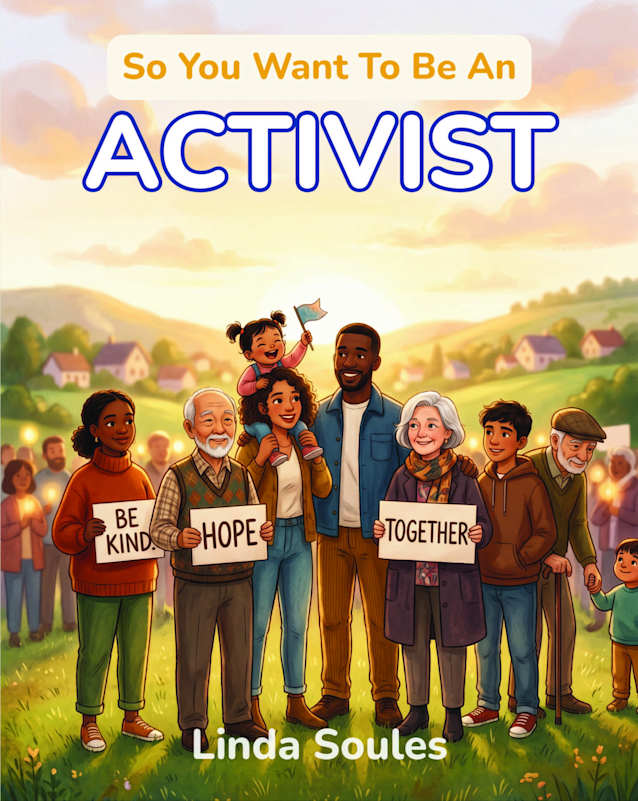
So You Want To Be An Activist (So You Want To Be A...)
About
WINNER of the Literary Titan Gold Book Award
Most kids notice when something isn’t fair. This is the book for the ones who can’t quite let it go.
So You Want To Be An Activist is a thoughtful, beautifully illustrated introduction to one of the most important kinds of work a person can do: noticing a problem, refusing to look away, and gathering others to help fix it. Written for curious readers ages 10–14 (and a treasured shared read for ages 8–9), it treats activism not as shouting into a crowd but as a real craft — one built on listening, writing, organizing, patience, and the stubborn belief that ordinary people, working together, can change the world.
Instead of talking down to young readers, this book shows them the honest texture of the work: the thrilling wins and the slow middle, the marches and the quiet hours at a kitchen table making phone calls nobody will ever see. Kids learn what an activist actually does, the tools they use, the skills they build, and how real movements — from ending child labor to winning women the right to vote — began with a few determined people who decided something had to change.
Inside this book:
- What an activist actually does, day to day — and where the real work happens
- The tools of the trade: the petition, the megaphone, the spreadsheet, and the humble handmade sign
- The best parts and the hardest parts of the work, told honestly
- A real “A Day in the Life” of an organizer
- The most important qualities of an activist — plus a few surprising skills you might not expect to need
- Inspiring true profiles of real changemakers: Frederick Douglass, Wangari Maathai, Malala Yousafzai, and Mohandas Gandhi
- Fascinating fun facts, a kid-friendly glossary of civic words (advocacy, boycott, grassroots, solidarity, civil disobedience), and concrete first steps any young reader can take right now
- A “Could this be you?” self-assessment to help kids picture themselves in the work
A standout addition to any home, classroom, or library shelf, this is a perfect gift for the kindhearted, justice-minded kid who cares about their community, their planet, and the people around them. It pairs naturally with lessons on civics, government, social studies, peaceful protest, leadership, and how change really happens — and it gently reminds every young reader that they don’t have to wait until they can vote to have a voice.
So You Want To Be An Activist is part of the acclaimed So You Want To Be A… series — career and curiosity guides that take big dreams seriously, one for every passion and every curious mind.
Every activist started as one person who noticed something and refused to look away. This book helps a young reader find their something.
Praise for this book
"So You Want To Be An Activist by Linda Soules is part of her larger career-exploration series for young readers. This entry tackles a subject most career guides skip entirely: the work of refusing to accept things as they are. The book walks young readers through what activism actually looks like day to day, from a 6:30 AM news scan to a 7:00 PM community meeting in a church basement with twenty-three people ranging from sixteen to eighty-one years old. It explains tools like petitions, megaphones, and even the unglamorous spreadsheet of volunteer names and phone numbers, before profiling real historical figures including Frederick Douglass, Wangari Maathai, Malala Yousafzai, and Mohandas Gandhi. The book is honest about the slow, often invisible nature of the work, the burnout, the years of rejected petitions, and the quiet satisfaction of preventing a harm nobody will ever notice happened.
Linda Soules writes with a steady, conversational warmth that never talks down to its young audience. The pace moves smoothly between practical instruction, like a sample two-minute hearing testimony cut down from a longer draft, and bigger historical moments such as Gandhi's 240-mile Salt March. I appreciated the honesty of lines such as "a 'like' is not a vote, and a hashtag is not the same as showing up," which cuts through a lot of noise young readers absorb online. The individuals drawn from history are vivid and human rather than distant legends, and the themes of patience, listening, and civic courage are handled with real sincerity. So You Want To Be An Activist is a thoughtful, encouraging book that treats young readers as capable of real change, and it closes with the simple, lasting instruction to go find your something."
"So You Want To Be An Activist by Linda Soules is a thoughtful and empowering children’s book that introduces young readers to the real meaning of activism. Part of the larger So You Want To Be A… career-exploration series, this entry focuses on a subject many children may already sense in their everyday lives: unfairness. Rather than presenting activism as something distant or only for adults, the book shows kids that noticing a problem is often the first step toward meaningful change.
What makes this book especially effective is its honest look at what activists actually do. Young readers learn that activism is not just about marches, rallies, or loud public moments. It’s also about research, writing emails, gathering signatures, attending meetings, listening to communities, making phone calls, and organizing people around a shared goal. The book’s “day in the life” approach helps children picture the practical side of the work, from scanning the news early in the morning to attending community meetings in the evening. It also introduces tools such as petitions, megaphones, spreadsheets, and handmade signs, making the work feel both understandable and achievable.
Soules writes with warmth and respect for her audience, never talking down to young readers. I appreciated that the book does not pretend activism is always exciting or easy. It discusses burnout, patience, rejection, slow progress, and the quiet work that often goes unnoticed. At the same time, it remains inspiring through profiles of courageous changemakers such as Frederick Douglass, Wangari Maathai, Malala Yousafzai, and Mohandas Gandhi. These historical examples, along with fun facts, a glossary of civic terms, and practical first steps, help readers understand that activism requires courage, empathy, strategy, and persistence.
So You Want To Be An Activist is an excellent resource for children, parents, teachers, and librarians. The illustrations are engaging and diverse, helping young readers imagine themselves in the work, while the content is substantial enough to be useful even for older students exploring future careers or civic involvement. This book teaches children that their voices matter and that they do not have to wait until adulthood to care about their communities. It’s a grounded, encouraging, and highly recommended guide for any young reader who notices something unfair and wants to learn what they can do about it."
"So You Want To Be An Activist by Linda Soules is the kind of guide that meets young readers where they are: curious, restless, and ready to ask hard questions. It belongs on every shelf where children and the adults who guide them are learning how the world actually works.
Built for ten- to twelve-year-olds, this guide walks kids through the everyday work of activism, from petitions and spreadsheets to city council testimony and the patience it takes to keep showing up after a loss. Profiles of Frederick Douglass, Wangari Maathai, Malala, and Gandhi bring real stories to life without reading like a textbook.
Soules writes with warmth and clarity, like a trusted adult who respects a child's intelligence. Sentences are direct, vocabulary is explained naturally, and the glossary closes any gaps. As part of the So You Want To Be A... series, this volume fits a thoughtful collection built for curious minds. The illustrations throughout give younger readers something to linger over; my daughter stopped longest on the Wangari Maathai spread and wanted to know whether one person planting trees could really count. They pair well with shared reading between parent and child.
If your child is wondering whether this work might be for them, the closing self-check earns this book its place by naming what the work involves, what it costs, and how to start small. Worth reading together with your child and letting the book ask its own questions."
"Wonderful guide on how to be an Activist. Gives a breakdown of all the components and realistic expectations on the work it takes to make changes in the world."
"Another charming entry in the series of 'So You Want To Be…'. The illustrations are diverse and show a broad spectrum of folks. The book touches on the tools of job, where activism takes place and the very real burnout that can happen when you feel so passionately about your work. It also includes a 'day in the life' section so one can get a better idea of the workday and a section on some well known activists, fun facts and ways to prepare to share your passion for a cause. Has a useful glossary and a list of books to read next to 'change.'"
"Overall, I enjoyed this book and would recommend it to any parent. It teaches kids that there are things that they can do about the problems in their communities. It teaches kids that activism is not just going to rallies, it is more, it is doing research, emailing your congress, and attending hearings and meetings. The book introduces kids to what they might be doing, where and when as well as the tools they might use as an activist. The book also talks about the downfalls of activism, and how to overcome those downfalls, and provides tips for how to succeed as an activist. The book introduces kids to why the work of activism matters, and has potential to excite kids about a career in activism. Additionally, I enjoyed the touch of history with the famous activists and fun facts. The additional more to explore information is also quite useful and can keep kids active and engaged. I also found the graphics to be quite engaging, depicting the life of an activist from day-to-day and the various tasks in which an activist may engage. I can see how kids could imagine themselves as an activist based on the imagery. Although this is a children’s book, I can see it being applied in a high school setting, perhaps to help a teen find their future career. Overall excellent insight into the career of an activist."
"I was looking for a book for my 12 year old to read about what she's interesting to learn more about and this has the perfect amount of information with great examples. It's just enough to pique her curiosity and inspire to learn more. There's just enough to learn about as well as examples for more research. I appreciate how it's written in a way that's not condescending but enough to let children know they are intelligent enough to learn more but need some guidance as well. It had great examples of different activists to inspire more research. The way it's written I could see it would help develop leadership skills, confidence and everything my child needs to get a good start on thinking about the impact she will make in her life and how to better think about what it means to give back. I wish there was something like this series when I was a child."
"Activists are concerned citizens who are emboldened, compassionate, empathetic, and sympathetic to issues concerning the masses. They organize people, whether by marching, rallying, speaking, educating, or directing. Activism is a position of power and bravery. An activist must be resilient, an excellent listener and strategist, and a moral and ethical person.
The less-seen qualities spoken about are dedication, adaptability, and patience. Many dedicated hours go to research to effectuate change. Even in defeat, victory delayed doesn't mean victory denied. Sometimes, defeat is a powerful motivator, helping activists refocus and redirect their strategy toward a successful outcome.
Making life better as a group - the betterment of all is true activism. The focus is never singular. Patience is needed while waiting for responses, legislation, decisions, money, signatures, and volunteers, and while trying to gain traction. In the beginning, there's as much silence as noise in the early stages of work. This book is strongly recommended for anyone who does not understand the time and work put into activism."
"Great way to acknowledge what an activist does. Knowing that anyone can undo the injustices in the world takes a commitment and a belief. I was shocked when reading that some activists lobby for changing laws for people they will never meet. I thought it was always for where the person lived that counted. When you want change you have to have patience because it doesn't happen overnight. I think this is great for any beginner with a dream and looking to change the world for generations to come."
"This book shows kids how they can speak up and help their communities right now, without waiting to grow up. It explains what it means to stand up for a cause through simple ideas like volunteering, teamwork, and kindness. By turning big ideas into easy, everyday actions, it’s the perfect guide to inspire kids to find their voices and make the world a better place."
"This was a great insight into the world of activist. From beginning to end. I recommend this for any young and aspiring people to read."
"This book is very informative for new or up and coming activists. It talks about how to get started, where to go, who to connect with, how to make connections, the tools of the trade, how to grow and build your character and persona in the activism community. It also goes into the ups and downs of being an activist, the hard parts, and the not so hard parts. I would recommend to anyone looking into activism!"
"A great book to explain the realities of being an activist. It gives great insight to job details, how to work as a team, and overall character building. Love the 'what you can do now' section, as well as the resource pages! Artwork is inspiring as well."
"Very informative book for children and adults who are ready to make a change, whether large or small, in this unjust world. A change that may be seen quickly or many years later. Great guide for getting started and continuing with patience and perseverance. We can all make a change for the better if we put our heart and lots of work into it!"
"Do you know of something that wont leave your mind? Be an Activist for that feeling you have. You don't have to be an adult yet, you have a voice to change things just be humble and non-aggressive as you talk about what you believe in. Talk to you parent or other adults in your life, a teacher, a pastor, your next door neighbor, anyone who will listen to you. If you want to be an Activist all it takes is the desire to change something. This book is a great starting point for your research, it gives you all kinds of examples of people who were able to make a difference over the years. It gives you strategies to follow and where to start your journey."
"So You Want To Be An Activist by Linda Soules is one of those children’s books that feels gentle on the surface but carries a steady, grounded strength underneath. Soules writes with a tone that is warm, encouraging, and quietly confident. She understands that activism is not about shouting the loudest. It is about noticing what is wrong, refusing to look away, and learning how to help others fix it. That message comes through clearly in every chapter, and it makes the book feel both accessible and deeply meaningful for young readers.
One of the first things that stood out to me was how Soules defines activism. She does not start with protests or megaphones. She starts with listening. She explains that activism begins with paying attention to the world around you, especially the parts that feel unfair or painful. She encourages kids to ask questions, to talk to people who are affected, and to understand the problem before trying to solve it. This approach feels mature and grounded. It teaches children that activism is not impulsive. It is thoughtful.
Soules also does a beautiful job introducing the tools of activism. She talks about petitions, handmade signs, spreadsheets, and megaphones, but she presents them in a way that feels practical rather than dramatic. She explains how each tool serves a purpose. A petition gathers voices. A spreadsheet organizes volunteers. A sign communicates a message. A megaphone amplifies it. She treats activism like a craft, something you learn step by step. This tone feels feminine in the best way. It is patient, organized, and focused on real skills rather than theatrics.
One of the strongest parts of the book is the section where Soules profiles changemakers. She includes Frederick Douglass, Wangari Maathai, Malala Yousafzai, and Mohandas Gandhi. What makes these profiles stand out is how she highlights the specific actions each person took. Douglass used writing and speeches to change minds. Maathai planted trees and built community. Malala insisted on education even when it was dangerous. Gandhi organized people through discipline and nonviolence. Soules does not turn these figures into superheroes. She shows them as people who made choices, took risks, and stayed committed. This makes activism feel achievable rather than intimidating.
The book also includes a self‑assessment section that encourages kids to imagine themselves as activists. Soules asks questions like what problems they notice in their community, what skills they already have, and what kind of change they want to help create. This part of the book feels gentle and empowering. It does not push children toward a specific cause. It invites them to think about what matters to them personally. It teaches them that activism is not one size fits all. It can be quiet or loud, creative or analytical, public or behind the scenes. That flexibility makes the book feel inclusive and supportive.
Soules also emphasizes patience and persistence. She explains that activism is rarely fast. Change takes time. She uses examples of long‑term movements to show how progress often comes slowly, through small steps and steady effort. This is an important message for kids, especially in a world where instant results are expected. Soules teaches them that meaningful change requires commitment. She does it in a way that feels honest but still hopeful.
Another strength of the book is how it introduces community organizing. Soules explains how activists bring people together, how they build trust, and how they share responsibilities. She talks about meetings, planning, and communication. She shows how organizing is not glamorous, but it is essential. She also highlights how activists rely on each other. This part of the book feels especially valuable because it teaches children that activism is not about being a lone hero. It is about working with others, listening to different perspectives, and building something stronger together.
The writing style is clear and accessible. Soules uses language that is easy for kids to understand without oversimplifying the concepts. She respects her readers. She trusts their intelligence. She explains complex ideas like social justice, equity, and civic responsibility in ways that feel natural and relatable. The tone is warm and steady, like a mentor guiding young readers through their first steps into activism.
The illustrations add to the book’s charm. They are colorful, expressive, and supportive of the text. They make the book feel inviting and help younger readers stay engaged. The layout is clean, and the pacing is balanced. Each chapter offers enough information to be meaningful without overwhelming the reader.
What makes the book truly special is how it blends inspiration with practicality. Soules does not simply tell kids they can change the world. She shows them how. She gives them tools, examples, questions, and encouragement. She teaches them that activism is not about perfection. It is about courage, compassion, and consistency. She also teaches them that activism is not only about big global issues. It can start with something small, like helping a classmate, cleaning a park, or speaking up when someone is treated unfairly.
By the end of the book, I felt a deep appreciation for Soules’s approach. She writes with a feminine steadiness, a softness that never becomes sentimental, and a clarity that never becomes harsh. She respects the reader, respects the subject, and respects the work of activism. So You Want To Be An Activist is more than a guide. It is an invitation to pay attention, to care, and to act. It is the kind of book that can spark a child’s sense of responsibility and remind adults why activism matters."
"This middle grade children’s book about activism is an informative and engaging read that explains what it truly means to stand up for a cause. I think both children and adults can learn a lot from its message about what being an activist actually entails. I even learned an interesting fact about my home state and a training school I had never heard of before!
Being an activist isn’t just about standing your ground on an issue, it’s about standing up for your neighbor or even a complete stranger miles away. The author does a wonderful job breaking down these concepts in a way that’s easy for children to understand while still offering meaningful lessons for adults. It’s a thoughtful introduction to empathy, advocacy, and using your voice to make a difference."
"This book is more than a look into what it’s like to be an activist. This book helps kids (and adults) think about how to make changes in their community, large or small. The author also includes more resources to help the reader get all of the answers to the questions they might have."
"This book is a great way to explain to children what activism is and what the peaceful protest that they hear about on the tv and social media really means. Especially if you, the parent are involved in activism, this book explains what and why you are doing but in terms they can understand. It empowers them to see what they think needs to be changed, starting in their own communities and deciding to do something about that. That grass root organizations start local and build from there. It shows them that there are many steps to activism from something as big as creating petitions to something as small as the poster board signs that people make to show what they stand for. It also shows the base of activism, the door knocking, the countless calls, and understanding the culture of the community and how to approach fears the neighborhoods might have answering questions about what they want to change. I also love that the book highlights many peaceful activists including Malala Yousafzai, a child like them that fought for justice. I think it is important to show children that their opinion counts and speaking up for other people can start with them."
"I really enjoyed reading this book as it explained the uphill battle of being an activist very well. It is unfortunate that we live in the world today where the people in power often overlook the rights of others based on their inability to empathize with these marginalized communities. I enjoyed the language and hopefulness that the book conveyed. I think my kids will enjoy it and also be inspired."
"One aspect that particularly caught my attention is the idea that major changes begin with small actions. The book encourages readers to get involved, help others, and stand up for what they believe is right, reminding us that every effort counts.
The writing is welcoming and highlights the importance of teamwork, leadership, and perseverance. It is an educational and motivating book that I would recommend to anyone interested in learning more about this topic and how to contribute positively to society."
"Of all the books in this series I have read, this is in the Top 5 of Most Learned. I have always been interested in helping bring change to my community but have no idea how to get started. Until now, the links and resources listed are just a starting point but will no doubt be helpful to learn my next steps. I encourage all young readers to check out this book and then find a cause you care about. Or learn about some of the greatest activists, kids your age maybe! We can all help make change and this book gives real insight to it as a career."
"Great for kids and teens. It really explains how & why being an activist can help change things. It tells them right ways to do it & gives many examples of the people who changed things & why it is important!"
"This book shows kids how to make a difference by speaking up, working with others, and taking action. The book explains that activism can involve volunteering, organizing, and learning about important issues. She uses examples of famous activists to show that anyone can create positive change through courage, teamwork, and persistence."
"I am really enjoying the 'So You Want to Be A...' series of kids' books. Some have been obvious - Ballerina, Immunologist, Astronomer - but this one was really exceptional. It's HARD to take a balanced approach in a children's book about activism, but the author did a great job!"
"I picked up So You Want To Be An Activist by Linda Soules expecting another 'follow your passion' book. This is not that.
Soules gets straight to the logistics and I’m here for it. She actually shows you how to run a petition drive, what to put on a sign so people stop scrolling, and how to use a megaphone without sounding like you’re yelling into a void. There’s even a section on spreadsheets for tracking volunteers and donors — not glamorous, but that’s the stuff that keeps a campaign alive.
What made it stick for me were the day-in-the-life scenes. Planning a rally, dealing with media questions, handling pushback from adults, trying not to burn out by week 3. It feels like someone pulled back the curtain and said 'this is what it’s really like.'
I also loved the profiles. Douglass, Wangari Maathai, Malala, Gandhi — Soules doesn’t just name-drop them. She breaks down what tactics they used and why they worked, so you can borrow ideas instead of copying them.
She also covers the modern bits: digital organizing, fundraising basics, building coalitions, and working across different groups without being tone-deaf about it.
Perfect for: teens and young readers who are tired of just being mad online and want to actually do something. If you want tools, not just inspiration, start here."
"This is such a great book for kids. My child asked me: 'Mom, what's an activist'? and I'm glad to have found this book as I could not provide a better explanation myself. What I particularly liked about it is how gorgeous the illustrations are, how well it is explained how being an activist starts from a desire to fix something unjust and make it right. It also explains the most rewarding as well as the hardest part of the job. Overall, a great way to introduce kids to being a good citizen."
"Seriously I think I'm going to read every book in the series. While these are books for young adults, they read very well and are age appropriate for middle, high school and beyond. I love the diversity included in these books too - the representation of different genders, nationalities, and belief systems is so important. Excellent read and great resources."
"Every so often an activist is born. From a very young age they are aware of the difference between the haves and have nots, that the earth is suffering from our abuse. This book helps a young person to understand what being an activist is, it clearly outlines what can be done. The author made this book very friendly to young minds. If you think your child may want to participate more in activism this book is a great help!"
"These "So You Want To Be..." books are amazing! This one, in particular, speaks to my heart. I am helping to raise two girls and I took them on their first protest march last year. This book is packed with information on what it takes to be an activist. It's a lot more than just marching in the street and this book does a great job of listing the different ways people can be an activist, and the different duties that they have. I don't think this is a book that you can get through in one reading, but this is definitely a book to keep on hand to reference for your future activists!"
"This is a great YA book. Would be a fantastic unit in middle or high school. Very thorough and thought provoking. Favorite quote: 'Activists know one thing the rest of us only learn from them: the world we live in was built by people who were not waiting for permission.'"
"So You Want to Be an Activist by Linda Soules is an informative and encouraging read for anyone interested in making a difference and becoming more involved in causes they care about. I appreciated how approachable the book is and how it helps turn the idea of activism into something that feels practical and achievable.
The book offers thoughtful guidance while encouraging readers to find their own voice, understand the issues they care about, and take meaningful action. I especially liked the emphasis on being informed, engaged, and consistent rather than feeling like you have to do everything at once.
Overall, this is a worthwhile read for anyone who wants to better understand activism or is looking for motivation to become more involved in their community. A great starting point for someone who wants to turn their concerns into positive action."
"This is a very informative book about activism. The author goes into depth about the daily life of an activist and explains the process in an easy to read manner. I especially like how the author lists well known and unknown activist throughout history. This book helps the younger generation learn how to impact the world and is also a great starting point for anyone who is interested in making a change and not sure how to get started."
"So You Want To Be A: a series of books geared towards our younger generation. What a great concept. Around 200 books to help them figure things out. This was my first but certainly not my last.
So You Want To Be An Activist is an awesome introduction for teens looking to be more involved with activism. This books is a much needed helper for people who don’t know where or how to start making a difference. It gives the good, the bad and the ugly sides of activism using real life examples fun facts and what if scenarios to do so. It teaches the youth the structure, background and expectations of the experience as well as showing the downsides to it such as burnout and anonymity.
I would recommend any teen looking to jump into activism of any sort to read this first!"
"This is a thoughtful, encouraging, and practical read for a child interested in fighting for right in this world. This book, by Linda Soules, is a gentle, illustrated primer for kids who feel that something isn't right and want to help set it right. The author aims at an audience aged 10 to 14. I read this book with my socially-minded seven-year-old, who was inspired by the examples of activism in the book. They loved the idea that activism is feeling something isn't right, and they can step in to fix it, regardless if that wrong is a polluted river, a kid getting picked on, or a law that protects the wrong people. The author defines activism as the mostly patient work of researching a problem until you can explain it in two minutes, running a meeting where everyone feels useful, writing letters, attending hearings, listening.
The art is warm and diverse, showing people of different ages, races, and abilities working together, from kitchen tables to church basements to city council chambers. I loved how it handles hard questions too, noting that activists disagree about tactics, that nonviolence isn't the same as politeness, using the Montgomery Bus Boycott as an example."
"A great book explaining that being an activist isn't just about marches being loud! You can make a difference in lots of other ways.
I loved the day in a life aspect of the book, I think children will be able to relate to the character in the book.
It breaks activism down showing what it really is: showing up, listening, writing, meeting people, and sticking with things even when they are slow."
"This book is a great inspiration for young people interested in getting involved in their communities. Easy to read with simple, inspirational examples of activism."
"Activists refuse to take the world as you see it. So if you question why when others just accept the status quo, then you might be an activist. This book helps to introduce you to activism. The behind the scenes of what it takes. The phone calls, meetings, speaking, and listening skills needed. Ms. Soules lays it out for you in a clear voice. That you can choose be the paid activist or the volunteer. When you read this book it is more in line as a storyteller then crisp hard facts laid out. I have one granddaughter that I will be recommending this book to."
"Great age appropriate book for children learning about advocation and the ways to get involved with causes they support. Would recommend to 11-13 year olds who are learning about activism movements and want a better understanding of how it can affect them. I enjoyed how they brought in age appropriate examples of movements they may enjoy or causes they may see day to day. Would recommend to teachers who want to share more about this topic."
"I really enjoyed learning about how activists take on their jobs and what exactly an activist do. I read so many things about an activist that I didn't even knew existed. I heard of it, but I didn't really understood the meaning of it until I read this book and I learned about a lot of famous people I heard of before and people I never heard of, so that was neat that they added those facts and knowledge in there. This is really good for people, who wants to become a full time activist and learn some key points and learn a little history background as well. If you don't remember what you learned in school too because, I most definitely forgot some of the famous people and it ran a light bulb in my head and gave me some insight of it. So I totally recommend this to people in junior high, high school, or even in college because you can actually learn a lot without even realizing."