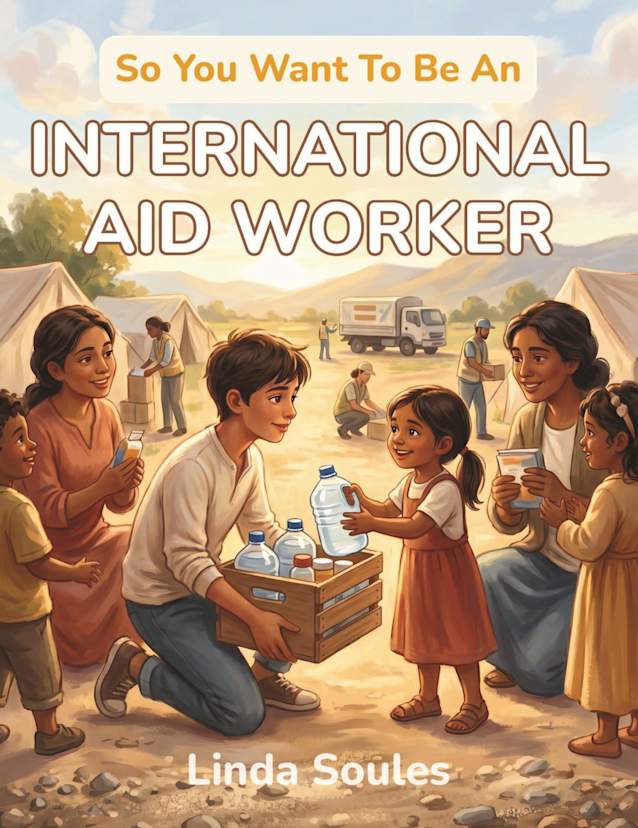
So You Want To Be An International Aid Worker (So You Want To Be A...)
About
What would you do if a truck full of food was stopped at a checkpoint in the middle of a war?
Every day, international aid workers face questions like that one. They head toward earthquakes, floods, famine, and war, bringing clean water, food, shelter, and medicine to families who have lost almost everything. So You Want To Be An International Aid Worker is an honest, fascinating, and hopeful career guide that shows kids ages 10 to 14 what humanitarian work really looks like, and whether it might be right for them.
A kids’ guide to humanitarian aid, disaster relief, and refugee support
Young readers discover the difference between emergency relief and long-term development, why clean water and toilets save more lives than any dramatic rescue, and how logistics gets five thousand tents across a broken landscape. They learn the four humanitarian principles that guide organizations like the Red Cross, UNICEF, and Doctors Without Borders, and why aid workers never take sides in a war. They also learn a lesson that many adults miss: the best help treats people as partners, asks what they need, and protects their dignity.
Funny, surprising, and real
This is not a dry textbook. Readers follow an aid worker through a full day in a refugee camp, including the morning a goat eats the distribution list. They meet Magawa, the landmine-sniffing rat who won a gold medal for bravery, and learn how children in Spain sent a clown to a refugee camp after their pen pals wrote, “We miss laughter.” They find out why donated stiletto heels ended up in a tsunami zone, play the Pack the Truck challenge, and solve the same kind of water-truck math that real aid workers do every day.
Inspiring true stories of famous humanitarians
Profiles introduce Henri Dunant, whose idea became the Red Cross; Sadako Ogata, the “five-foot giant” who led the United Nations refugee agency; Salva Dut, a former Lost Boy of Sudan whose organization has drilled hundreds of wells; Abdul Sattar Edhi, who built the world’s largest volunteer ambulance service; Eglantyne Jebb, founder of Save the Children; and polar explorer Fridtjof Nansen, who created a passport for refugees with no country.
Honest about the hard parts
The book doesn’t romanticize the work. It talks openly about danger, burnout, long stretches far from home, and the heartbreak of never being able to help everyone, in language that respects young readers without overwhelming them.
Practical guidance for future humanitarians
Kids learn what to study, how people actually get hired, what they can do right now to prepare, and which related careers they might love, from emergency management to public health. A glossary, fun facts, an author’s note, and a curated list of books, websites, and hands-on activities make this book a strong choice for classrooms, homeschool social studies, global citizenship lessons, and library collections.
Perfect for kids who care about fairness, wonder about the wider world, and want to make a difference, So You Want To Be An International Aid Worker is part of the So You Want To Be A... career exploration series for curious young readers.
Praise for this book
"Sometimes making a difference means stepping in when communities need it most. In So You Want to Be an International Aid Worker, Linda Soules introduces young readers to the individuals who provide assistance during some of life’s most difficult situations. Aid workers may arrive after a natural disaster, help families who have been forced from their homes, or make sure a place has clean water and other necessities. Their job isn’t always what people might expect. Soules explains that humanitarian work can involve immediate relief, but it can also mean providing resources that help communities become stronger over time. Readers discover where these professionals serve, the skills and personal qualities they need, what a typical day might entail, and both the rewards and challenges of the career. Historical humanitarians, including one of the Red Cross founders, Henri Dunant, are introduced, and practical suggestions show children how they can begin developing useful abilities right now. Could helping people through hard times be the right profession for you?
So You Want to Be an International Aid Worker is another great addition to Linda Soules’s career series, and I learned so much from it. Soules writes in a clear, conversational way that makes a complicated profession understandable without ignoring its dangers or responsibilities. From an educator’s standpoint, this would fit perfectly into classroom discussions about jobs, humanitarianism, geography, empathy, problem-solving, and how young people can make a difference, even on a small scale. The illustrations are bright and detailed. They include both men and women who do this important work. I hope this book inspires kids to look for ways they can help others. Curious young learners interested in service, travel, or meaningful careers will find plenty to think about here. This book belongs in schools, homes, and libraries everywhere."
"In So You Want To Be An International Aid Worker, Linda Soules introduces us to the specialists who manage emergency operations around the world. The chapters walk you through a packed day in a crisis zone, starting with early morning route checks and ending with late-night meetings where different groups align their distribution schedules. A project’s success depends on a delicate balance: meeting people’s urgent survival needs on day one, while designing plans that help residents take over later on. Simple tasks like inspecting a camp’s water points or managing a distribution’s orderly supply delivery show the tremendous amount of prep work needed to keep a relief camp functional. Thousands of displaced people depend on these supply chains every day. Seeing the vast amount of behind-the-scenes coordination that’s required to deliver necessities will change how you look at disaster relief. It’s a fascinating look at a career where spreadsheets and shipping routes are just as important as raw courage.
Linda Soules’ So You Want To Be An International Aid Worker is an eye-opening children’s book that demystifies the humanitarian sector for young readers who want to change the world. The chapters follow a very clear order, moving from standard field principles to the exact steps children can take right now to prepare for this kind of work. The snapshots of real-world humanitarians, including Eglantyne Jebb and Abdul Sattar Edhi, show how much of a difference one person can actually make. Moreover, the illustrations are well-designed, giving a friendly face to the staff and families working together on the ground. Soules’ engaging writing keeps you interested, making math challenges and water-truck logistics easy to visualize. She includes interactive moments like a mini truck-packing quiz that lets readers test out the exact problem-solving skills real field workers use every day. If you know a child who cares about global events, this book is a great find."
"So You Want To Be An International Aid Worker by Linda Soules is part of the So You Want To Be series. What would you do if a truck full of food was stopped at a checkpoint in the middle of a war? Aid workers face questions like that every day, heading toward earthquakes, floods, famine, and war to bring clean water, food, shelter, and medicine to families who have lost almost everything. This book shows younger readers what the job really involves, from emergency relief to the principles that guide groups like the Red Cross and UNICEF. Along the way, they'll follow an aid worker through a day in a refugee camp (where the team still laughs about the goat who ate the distribution list) and find out how thousands of tents get moved across a broken landscape.
So You Want To Be An International Aid Worker by Linda Soules is a fascinating and surprisingly funny addition to the series, written in plain, friendly language that never talks down to young readers. Many kids imagine aid workers flying in to save the day, and Linda gently shows that the real work is far more down-to-earth, with logistics, math, languages, and working alongside local people as partners being important parts of the job. Readers will learn why clean water and toilets save more lives than any dramatic rescue, and the story of children in Spain sending a clown to a refugee camp after their pen pals wrote 'We miss laughter' is a lovely moment. There are inspiring profiles of humanitarians such as Henri Dunant, who gave the world the Red Cross, and Salva Dut, a former Lost Boy of Sudan who has drilled hundreds of wells. It's an honest book too, covering the danger, the hardship, and the heartbreak of never being able to help everyone, without overwhelming readers. At the end of this beautifully illustrated book, kids will find practical ideas for preparing now, a glossary, and a list of books and websites to explore, making it a strong choice for classrooms, homeschool lessons, and libraries. If you know a child who cares about fairness and wants to make a difference, this is the perfect place to start."
"Linda Soules’ So You Want to Be an International Aid Worker invites young readers into a world where compassion, courage, and practical skills come together to help people facing extraordinary challenges. This engaging children’s book explores the work of humanitarian aid professionals, from delivering clean water and medical supplies to helping communities rebuild after disasters. Soules takes a big, complicated subject and makes it understandable through clear explanations, relatable situations, and an encouraging conversational style. The book speaks directly to children who are curious about the wider world and might be wondering how they could make a difference. Its central message is that helping others begins with recognizing their humanity, listening to their needs, and treating everyone with dignity and respect.
One of the book’s strongest features is the way it introduces the many different responsibilities involved in humanitarian work. Kids learn about emergency relief, long-term development, supply chains, education, healthcare, and the importance of working alongside local communities. Soules explains concepts such as neutrality, impartiality, and independence in language young readers can understand. She also gives attention to the personal qualities that make someone effective in this field, including patience, humility, resilience, and problem-solving skills. Sections describing a typical workday, the challenges aid workers encounter, and the unexpected skills they use help children imagine what the profession actually involves. There’s also some welcome humor, including encounters with mischievous animals and the surprising role professional clowns can play in humanitarian settings.
The illustrations bring considerable warmth and personality to this picture book. Soft, earthy colors, expressive faces, and detailed backgrounds create inviting scenes of aid workers interacting with families, distributing supplies, organizing relief efforts, and collaborating with community members. The images convey kindness and connection, particularly when adults and children are shown sharing conversations or working together. There’s a pleasing sense of movement in the busier scenes. The visual approach makes unfamiliar environments feel accessible while reinforcing the book’s emphasis on cooperation. The illustrations also offer younger readers a way to engage with the subject even when the accompanying explanations introduce more sophisticated ideas.
Soules enriches the book with historical profiles of notable humanitarians, interesting facts, practical suggestions for aspiring aid workers, and a helpful glossary. These additions make So You Want to Be an International Aid Worker especially useful for curious children ages 10 to 14, as well as parents and educators looking to encourage conversations about global responsibility. The book’s substantial amount of information gives readers opportunities to return to individual sections and explore particular interests. I think what will stay with readers is its thoughtful understanding that meaningful assistance requires preparation, teamwork, and a willingness to learn from others. Soules presents international aid work as a deeply human endeavor, encouraging children to see kindness, curiosity, and service as qualities they can begin developing in their everyday lives."